

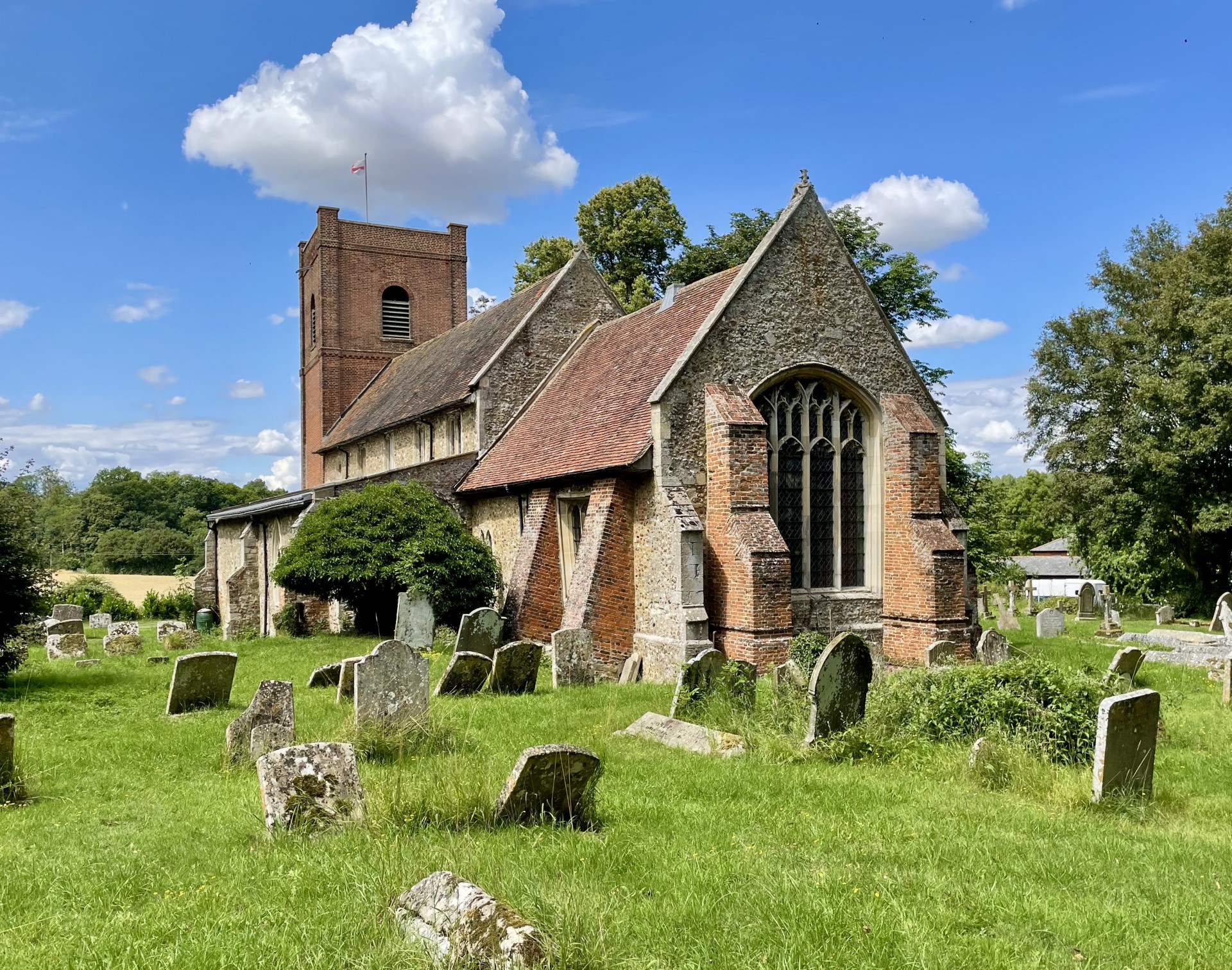
Cowlinge parish church has been described as ‘a treasure chest of a church’; ‘everything a historic church should be’; ‘a treasure-house of ancient and interesting things … [with] an air of rustic antiquity, which is an unforgettable feature of this church’s unique character.’
Like many churches in this country, it is all of these things. But generous and fair as these evaluations may be, there is even more to St Margaret’s. The more one looks into the building, the more enigmatic, eccentric and intriguing it appears.
The Basics
The visible fabric of the church suggests in essence a mortared-rubble structure of the 14th–15th centuries (indicated by a commixture of Decorated and Perpendicular features) with a brick W tower. For the date of this latter there is written record: the tower was completed in 1733, as a replacement for an original, allegedly collapsed, of unknown form or date.
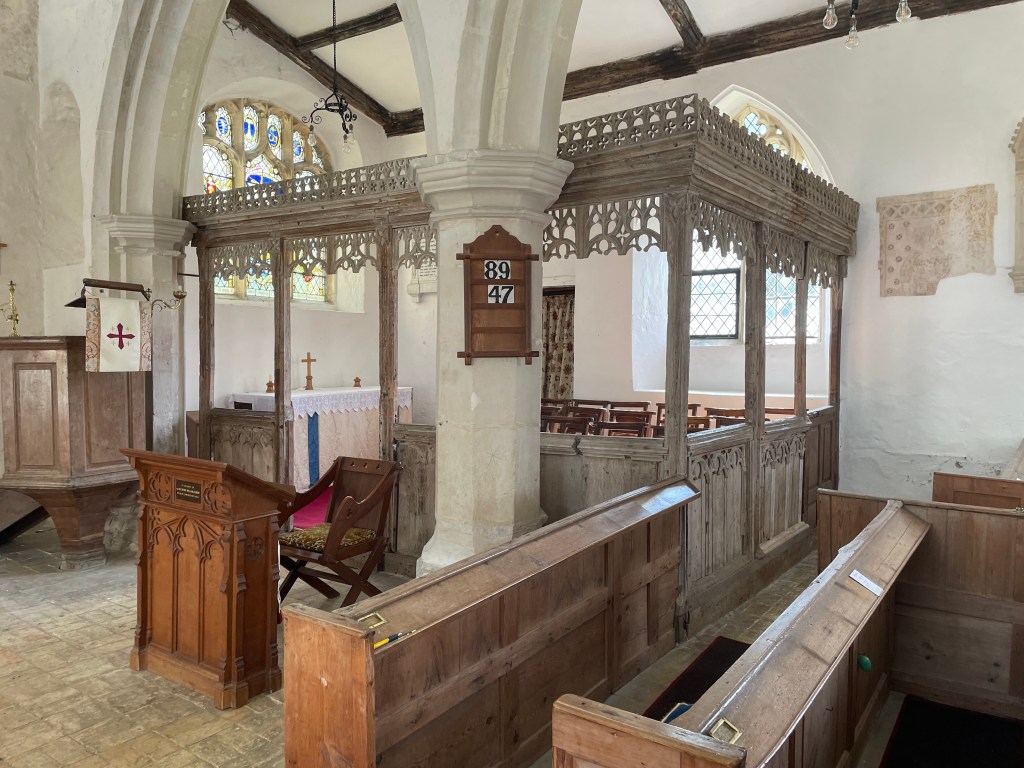
St Margaret’s largely escaped the attention of Victorian restorers – a noteworthy stroke of luck which not only makes this building a valuable historical resource but also a monument which would merit exploration.
In passing, it is also worth noting that professional musicians who have performed in the church have remarked upon its exceptional acoustics, especially for the human voice.
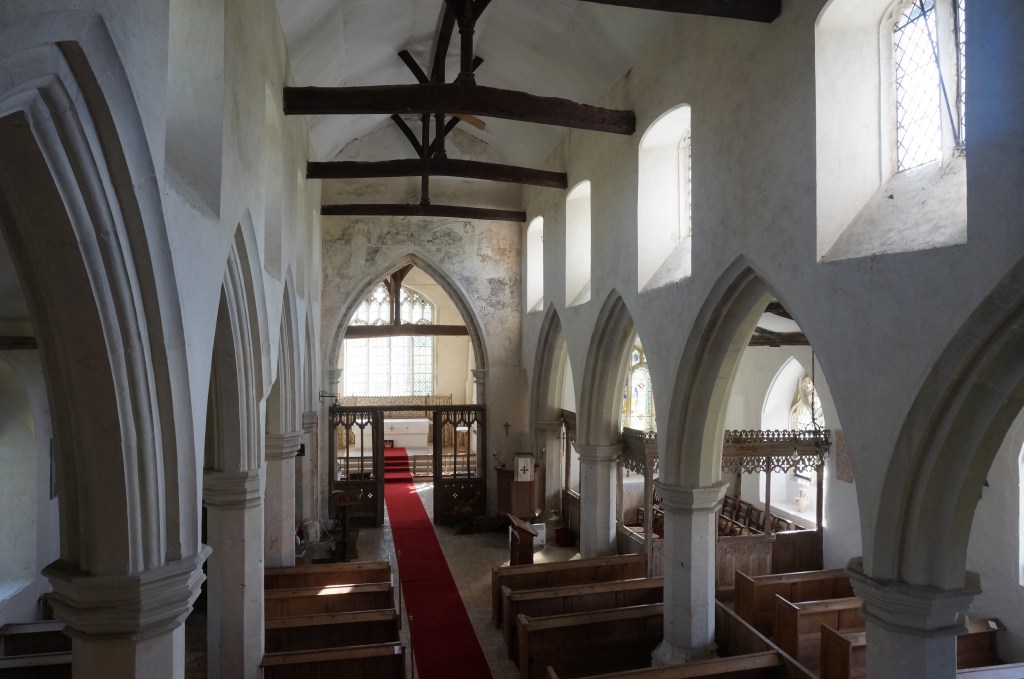
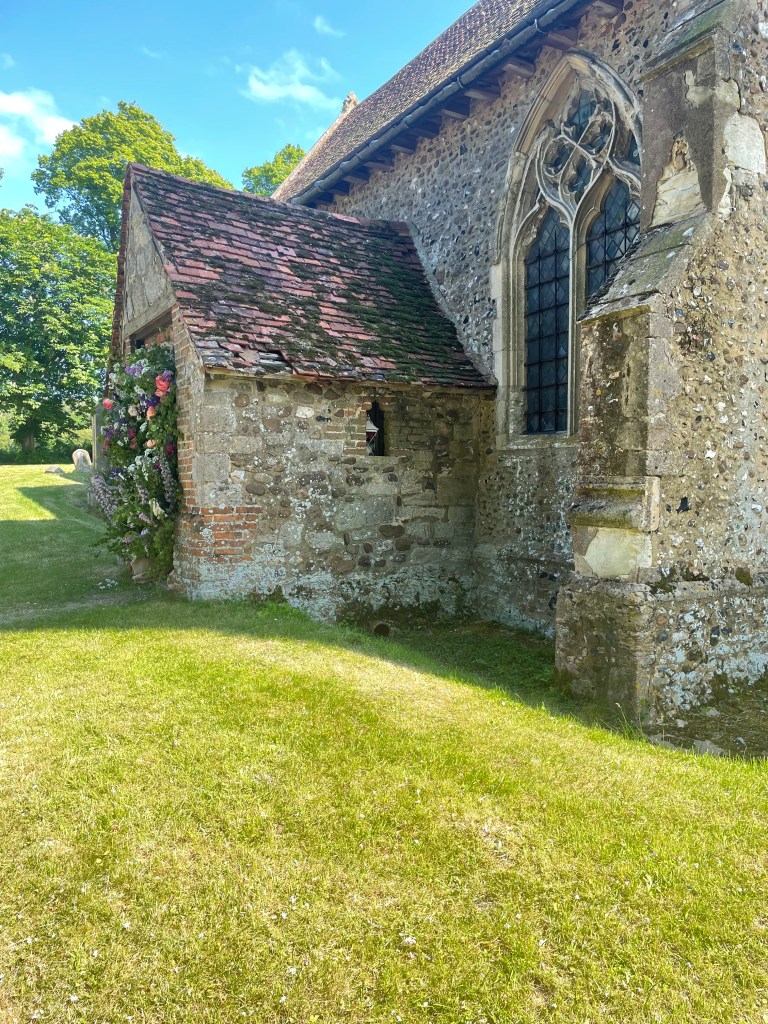
St Margaret’s is acknowledged to be much loved not only by those few charged with its care but also within its parish. The church guide (1993) notes the pride the village takes in the church. As recently as 17 December 2023, a carol service organised by the CCC was attended by no fewer than 87 adults and children – very nearly a full house. The second CCC-organised event, held on 1 April 2024 – an Easter Egg Hunt centred on the church – drew in excess of 20 families.
Yet when one considers this church, a paradox emerges: despite being held in high regard, this precious building is dying, simply because of neglect.
This sad state of steady decline has been monitored during periodic inspections of the church, the most recent of which (2021) warned of ‘significant problems’ brought by the deterioration of the building, problems so numerous as to make it difficult to prioritise the work now required. Indeed, this report, now four years old, concluded that St Margaret’s should be considered a building ‘at risk’. As a result, in 2023, this church was added to the Heritage at Risk Register, its condition having been accepted to be ‘very bad’ (Priority A) – presenting an ‘immediate risk of further rapid deterioration; no solution agreed’.
This does not mean that the church is beyond saving; what it does mean is that (i) a new and decisive initiative to re-connect the parishioners with the church (kept locked following an attempt to damage the interior of the building) is overdue and (ii) there is an urgent need to seek serious funding through various grant-giving bodies. Success in obtaining funding from grants requires that the church in question is valued by and plays a part in the life of the parish it serves.
The Cowlinge Church Companions, a (very) small group from within the parish, came together in 2023 to attempt both. If the attendance at the 2023 carol service is any indication, the prospects for our objective (i) appear promising.
 Cowlinge Church Companions